Category Focus/categories/learning
Learning AI Tools
Discover and compare the best learning AI tools and software. Browse 55+ curated tools with reviews and rankings.
Projects tracked
55
Sort mode
RECENT
Page
2
Discover and compare the best learning AI tools and software. Browse 55+ curated tools with reviews and rankings.
Projects tracked
55
Sort mode
RECENT
Page
2
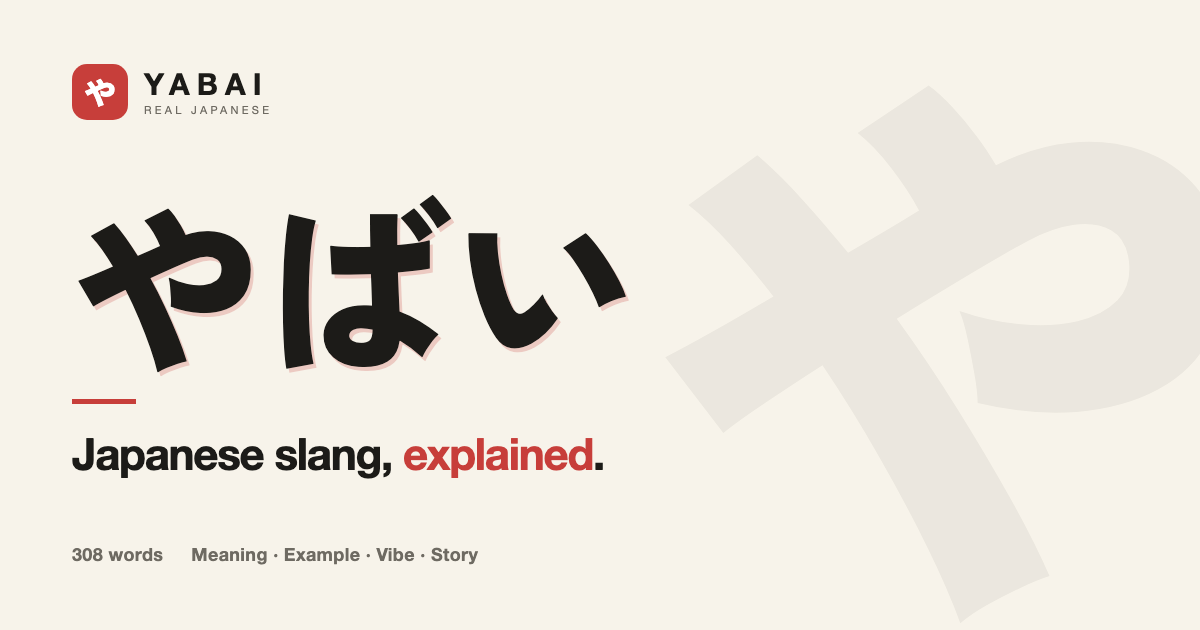
YABAI is a Japanese slang dictionary that gathers 308 real slang, internet, fandom and everyday words and gives each one a card built around giant Japanese typography. The site frames the project simply: やばい, 推し, 草, エモい — what they mean, how they sound, and who you can actually say them to. Every entry is treated as more than a translation lookup. Each word carries a meaning, an original example sentence, a vibe check that signals whether it is safe to use, friends only or something to be careful with, a culture note where there is something worth knowing, and a short story about where the word came from and who says it now. The result is a reference that answers the two questions a plain dictionary leaves open: how does this word actually sound in use, and can I say it? The 308 words can be read on the website, browsed alphabetically or by category, or carried in the Android app, which the site describes as putting all of them in your pocket. The gap YABAI is built to fill is the one left by formal language study. Textbooks teach Japanese that stops at the classroom door, and YABAI presents itself as the other half — the slang, internet, fandom and everyday vocabulary that lives outside a syllabus. Words like 草, described as 'lol, literally grass', or 推し or タイパ rarely come with the context a learner needs in order to use them without embarrassment: how casual is this, is it regional, is it tied to a particular subculture, is it something a visitor should avoid? A literal translation can be found almost anywhere, but a translation does not tell you whether a word is safe with a stranger, a colleague or only among friends. It also does not tell you the story, which is often the part that makes a word memorable. YABAI treats those missing layers — tone, social risk, cultural placement and origin — as the content, not as footnotes. The first of the five elements on every card is the meaning. Each word opens with one punchy line that captures its essence; やばい, for instance, is summed up as 'Amazing. Terrible. Insane.' — a deliberately informal line that mirrors how fluid the word is. That is followed by the full sense written in plain English, so a reader who wants precision is not left with a slogan. The second element is the example: an original Japanese sentence with a translation, showing the word at work rather than in isolation. The site is explicit that these sentences are never a quote and never a brand, which means the examples are written for the dictionary itself instead of being lifted from advertising or celebrity speech. For a learner, that distinction matters, because example sentences drawn from real but arbitrary sources can smuggle in formality levels or promotional tone that do not represent everyday use. The third element is the vibe check, and the site calls it out as the one thing dictionaries never give you. Each word is labelled Safe to use, Friends only, or Be careful, and is accompanied by tone hints such as self-deprecating, internet, or Kansai dialect. This is practical social information: it is the difference between a word a visitor can drop casually and one that will sound off, dated or too familiar in the wrong company. The fourth element is the culture note, which places the word in Japanese life — included when there is something worth knowing. Together, the vibe badge and the culture note turn a definition into a kind of usage briefing, so the reader learns not only what a word means but where it sits and who tends to say it. For anyone who has learned a word from a subtitle and then hesitated to use it, this is the layer that resolves the hesitation. The fifth element is the story: a short read on where the word came from and who says it now. The site takes an unusually honest stance here, stating that when an origin is genuinely disputed, the card says so instead of picking one version. In a space where slang etymologies are frequently repeated with false confidence online, admitting uncertainty is itself a feature — it tells readers which explanations are settled and which are guesses. All five elements are presented on cards designed to be looked at rather than merely consulted, with the headword set in giant Japanese typography alongside its romaji, its meaning, its example sentence and its vibe badge. The site's own phrasing for this is that each word is not a dictionary entry but a card you want to look at, reflecting a design choice to make browsing pleasant and screenshot-friendly rather than austere. A sample card shows やばい in large type with its romaji, meaning, example and vibe badge together. Structurally, the content is organized in two ways. Readers can browse all 308 words as an A–Z list, or move through the eight categories that describe where you hear each word: Slang with 72 entries, Internet with 58, Otaku with 46, Everyday with 44, Untranslatable with 30, Reactions with 26, Cute with 24, and Anime-ish with 8. The homepage introduces the collection with eight starter words, one from each category — やばい, 推し, 草, エモい, それな, もふもふ, タイパ and ツンデレ — each shown with a short gloss and a category tag. The app itself is designed for low-commitment use: the dictionary ships inside the app in 13 languages, works offline, and every word can be read aloud by your device. The site states that nothing you collect leaves your phone. There are no streaks, no tests, no levels and no guilt; the experience is described as a Japanese culture snack — open it for a minute, meet one word, close it. The site also hosts short video content, including a thirty-second explanation of やばい, and notes that there are more videos on the yabai page and on seven other word pages. The benefits follow directly from that structure. A learner gets the meaning quickly, then gets the surrounding context that makes the word usable: an example to model, a vibe badge to judge risk, a culture note to understand placement, and a story to remember it by. Because the origins of disputed words are labelled as disputed, readers are not handed confident misinformation. Because the dictionary ships offline in 13 languages and can read words aloud, it works without a signal and supports pronunciation and listening as well as reading. Because there are no streaks, tests or levels, there is no backlog to feel guilty about — the dictionary can be used in the small gaps of a day. And because it is a paid app with no ads, no sign-up and no subscription, the experience stays uninterrupted by advertising or account prompts, with nothing collected leaving the phone. Concretely, the dictionary fits several kinds of sessions. Someone who has just heard やばい in an anime or a video can look it up, read the one-line meaning, then check the vibe badge before deciding whether to try it with a Japanese friend. A fan of anime or otaku culture running into 推し or ツンデレ can browse the Otaku or Anime-ish category and find the term with its example and story attached. A reader curious about concepts that resist direct translation can explore the Untranslatable set of 30 words, such as エモい, described on the site as beautiful in a way that aches. An internet user puzzled by 草 can go straight to the Internet category, which holds 58 entries. Someone with a spare minute can open the app for a single card rather than a study session. Someone offline — on a flight, underground, or without data — still has the full dictionary available, and can have the device read a word aloud. And someone who prefers listening can start with the short videos, such as the thirty-second piece on how one Japanese word means both 'Amazing!' and 'Oh no'. The obvious audience is people learning Japanese who have moved past the beginner material and want the vocabulary that textbooks leave out, along with anyone who consumes Japanese media, anime, fandom or internet content and wants to understand what people are actually saying. It suits readers who care about appropriateness as much as definition, and who like the story and culture behind a word rather than only its translation. The app is available as a paid Android download on Google Play, with the website serving the full word list for reading in a browser; the site notes it is a paid app with no ads, no sign-up and no subscription. The project was built end to end with AI agents in Claude Code, according to its Product Hunt description, and it is published under the YABAI name with 'yabai' as its site and product slug. Its listed topics are Android, Education and Languages. Taken as a whole, YABAI's value proposition is context. It takes 308 Japanese slang, internet, fandom and everyday words and wraps each one in the meaning, example, vibe check, culture note and story that a plain translation omits — and it says so honestly when an origin is disputed. Read on the web or carried offline in the Android app across 13 languages, with read-aloud support and no streaks, tests or ads, it is a dictionary built for a minute at a time that still tells you exactly who you can say each word to.
One More Thing is a micro-learning platform built to replace doomscrolling with something worth knowing. Instead of endlessly scrolling through content you will forget, you choose a subject you actually want to learn and work through it one card at a time. Every topic becomes a bite-sized learning deck you can swipe through in minutes, spanning areas such as psychology, history, science, money, culture, languages, and weird facts. The product describes itself simply as a place to learn anything, one card at a time, and it positions itself as a way to turn any subject into cards you swipe in minutes, not hours. The problem One More Thing addresses is stated directly on its website: your curiosity is the last real currency, and it should not be traded for noise. Endless feeds are designed to hold attention without leaving anything behind, and time spent scrolling typically produces nothing that sticks. One More Thing reframes that same swipe gesture as a step toward a sharper mind rather than a step deeper into the algorithm. The pitch is that every swipe becomes progress, and that reclaiming your feed for learning is a way to reignite the wonder you had as a kid. The goal is a daily dose of "huh, I didn't know that" instead of content you will forget. At the heart of the product is the deck. A deck is a set of bite-sized cards on a single subject, designed to be completed in one to three minutes. Each card carries one idea, with no fluff and no binge, so a session stays short and finishable. In the product's own demonstration, a card titled "Table Basics" states that the periodic table has 118 confirmed elements, and a "Tell me more" action lets you go deeper when you want the reasoning behind the fact. Navigation is gesture-based: you swipe a card up to flip to the next one. The stated outcome of this format is mastery in minutes — one to three minute decks on any subject, with one idea per card. Retention is handled by pairing the cards with quick quizzes. The website states that bite-sized cards plus quick quizzes add up to 50× better retention than cramming. In the demonstration flow, after swiping through cards you tap to reveal the why, then quiz yourself, and the session is finished in minutes. The claim is not that the app teaches more in a single sitting, but that the short, repeated format with immediate self-testing makes what you read actually stick. That combination — small cards, an explanation on demand, and a quick check — is the mechanism the product points to when it says learning here actually sticks. One More Thing is also a creation tool, not only a consumption tool. Its "Create, don't just consume" principle is implemented through AI: you type a topic and the AI builds you a deck on anything you can imagine, in seconds. That means the catalogue is not limited to whatever was pre-built — any subject you are curious about can become a swipeable deck. The site frames this as the difference between browsing someone else's library and making the learning yours. Combined with the "any subject you can imagine" claim on the landing page, AI deck generation is what lets the product cover the full range of curiosity rather than a fixed curriculum. Progress is made visible through gamification. The Product Hunt description notes that users earn XP, build streaks, unlock badges, and discover something new every day. In the interface, a deck such as "Elements: Sorted!" displays an XP total of 240 XP, giving an immediate, tangible signal of what a completed session was worth. Streaks turn the habit into something you do not want to break, and badges mark milestones along the way. "Keep curiosity alive" is described as a daily dose of discovery, which is why the product frames itself as a habit to build rather than a course to finish. There is, as the tagline says, always one more thing. Users who would rather start from a curated list can browse decks instead of generating their own. The site shows a topic row including Alkali Metals, Noble Gases, Halogens, Transition Metals, Table Basics, and Alkaline Earth Metals, plus a "Browse all" entry point. Named decks visible on the landing page include Elements: Sorted!, Fashion Unraveled: Style Secrets, Area 51: Secrets & Skies, Guinness Records Gone Wild, Master of Puppets: Metallica Unleashed, Master Manga Art & Technique, Laws Gone Wild, California's Best Kept Secrets, and Sweep of the Blade Deep Dive. The range is deliberately broad — science, fashion, mysteries, music, art, law, travel, and martial arts — reflecting the "any subject" positioning of the product. The product also lets you make it yours. Three looks are offered — Elegant Light, Royal Blue, and Dark Brown — and you can switch between them anytime, right from your profile. It is a small feature, but it supports the idea that the app is a personal space for your own curiosity rather than a single fixed interface, and it lets users match the reading surface to their preference for a daily swipe session. Putting it together, the workflow is deliberately short. You pick a subject, either from the browse list or by typing one for the AI to turn into a deck. You swipe through cards, one idea at a time, tapping when you want the deeper "why" behind a fact. You quiz yourself to check that it stuck. You finish in one to three minutes, and you earn XP while a streak and badges keep track of the habit. Repeat daily, and the product's promise is knowledge that accumulates rather than content that disappears — the same downward swipe you already know, pointed at something you would actually like to know. The benefits the site claims follow directly from that loop. The first is retention: 50× better retention than cramming, achieved through bite-sized cards and quick quizzes. The second is time well spent, with sessions of one to three minutes instead of hours. The third is a sharper mind, because every swipe is described as a step toward one rather than a step into the algorithm. The fourth is sustained curiosity — the daily "huh, I didn't know that" moment that reignites childhood wonder. The fifth is depth as an advantage: the product's framing is that you walk into every room with one more idea than yesterday and become the one who knows one more thing. Concretely, One More Thing fits the moments where scrolling usually happens. A commute, a queue, a few minutes before bed — the one to three minute session length is designed for exactly those gaps, so a deck can be finished instead of abandoned. Curated decks support browsing by interest: someone curious about chemistry can work through Elements: Sorted! and its related topics, while someone drawn to oddities can pick Guinness Records Gone Wild, Area 51: Secrets & Skies, or Laws Gone Wild. Music and culture fans can use Master of Puppets: Metallica Unleashed or Fashion Unraveled: Style Secrets, and art learners can take Master Manga Art & Technique. When nothing in the library matches a sudden question, typing the topic and letting AI generate a deck turns that flash of curiosity into something to swipe through immediately. One More Thing is aimed at anyone whose curiosity is currently being spent on an infinite feed: people who want to learn but do not want to commit to a course, a lecture, or a long article. The topics listed — psychology, history, science, money, culture, languages, and weird facts — suggest a general audience of casual learners rather than specialists. It is free to start, with no credit card required, and the site states that signing in takes ten seconds. Pricing beyond that is not described on the page. One More Thing is a micro-learning platform with a single clear proposition: turn doomscrolling into something worth knowing. Bite-sized decks, one idea per card, quick quizzes, XP, streaks and badges turn a few spare minutes into a daily learning habit — and AI deck creation means the subject can be anything you are curious about. Scroll less, know more: there is always one more thing.
YAP is a blockchain and AI language learning app that teaches you to speak languages rather than just tapping on screens. It provides real-time feedback on pronunciation and verifies learning progress onchain.
Wordy helps you master languages naturally through your favorite movies and TV shows with interactive subtitles and smart vocabulary tracking. It offers personalized learning paths for 20+ languages.
PocketDSA helps you master Data Structures & Algorithms with bite-sized daily coding questions and company-specific tracks. Build a daily habit for stress-free interview preparation on your mobile.
DuoNinja helps you practice vocabulary using spaced repetition with real example sentences and audio. It imports your Duolingo words and creates flashcards that show up when you're about to forget them.
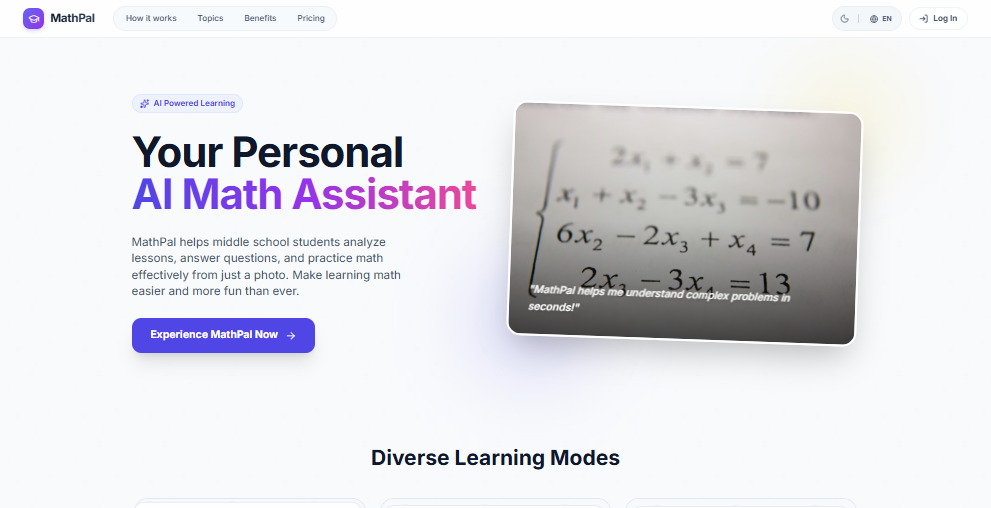
MathPal is an AI-powered math assistant that helps middle school students analyze lessons, solve formulas, and practice effectively from photos. It provides personalized learning with concept explanations, formula analysis, and smart practice exercises.

Your Love Style is a Valentine's experience that reveals your hidden relationship patterns through scenario-based gameplay. This free personality assessment analyzes your behavior in love-related situations without requiring login.
FocalRead is a speed reading app that helps you read 3x faster using RSVP technology. Import PDFs, ePUBs, web articles, X posts, and Reddit threads with one word at a time presentation.

Obooko is a free reading platform offering thousands of books available instantly in your browser or downloadable in PDF, EPUB, and Kindle formats. With over 4,000 legal book titles across 30 genres, it provides ad-supported access without subscriptions or proprietary formats.