Category Focus/categories/image
Image AI Tools
Discover and compare the best image AI tools and software. Browse 54+ curated tools with reviews and rankings.
Projects tracked
54
Sort mode
RECENT
Page
2
Discover and compare the best image AI tools and software. Browse 54+ curated tools with reviews and rankings.
Projects tracked
54
Sort mode
RECENT
Page
2
Viso Now is a self-building AI vision platform that turns images, video, and camera feeds into working computer vision applications. Instead of training models, annotating data, or writing code, users describe in plain language what they want to understand, and Viso Now builds the agentic vision logic and custom live dashboards for them. The platform is aimed at teams and individuals who need to solve real-world visual problems across industries such as construction, manufacturing, logistics, healthcare, food and beverage, oil and gas, hospitality, and transport, and who want to create, run, and manage entire computer vision products and systems from scratch on one platform. Traditional computer vision projects depend on model training, data annotation, and custom software engineering. That work is slow, expensive, and hard to maintain, and it often results in isolated, single-purpose solutions that address one use case at a time. The website states this directly: not all computer vision is equal, and isolated solutions are no longer enough. Viso's stated answer is a platform that drives business capabilities rather than leasing a single outcome that solves a single use case, offering flexibility, extensibility, and complete control of data across multiple locations. Because prompt-driven building removes labeling and model maintenance, the platform reports 90% less ML engineering effort compared with conventional approaches, along with an 85% reduction in the time-to-value of computer vision applications. At the center of Viso Now is prompt-based application building. A user describes the real-world situation they want AI to solve in plain language, and watches as Viso builds the application with them in real time. No model training and no annotation are needed. Each build produces agentic vision logic together with a custom live dashboard, so the result is not simply a detection model but an application that can be monitored and operated. The product page describes prompt-to-live-vision-agent in minutes and Visual General Intelligence for any use case, meaning the same engine is applied regardless of the industry or the problem being addressed, and applications connect seamlessly to other systems. Viso Now accepts multiple kinds of visual input. Users can click to upload or drag video files in MP4, MOV, or MKV, and images in PNG or JPG, or they can capture media directly using a device camera by taking a photo or recording video. When building, users choose how much effort the system applies by selecting between Fast, Balanced, and In-Depth modes. They can also start from a template or an example instead of a blank prompt. Once a draft application exists, users iterate on it until they are happy with the finished solution, and then go live by connecting cameras or uploading connectors so the application can be used immediately. The platform provides a template gallery of ready-made vision applications that illustrate what can be built. Templates include Task-Aware PPE Check, Excavator Near-Miss Monitor, Hot Work Safety Check, Work-at-Height Safety Check, MEWP Fall Protection Check, Clinical PPE Protocol Check, GMP Hygiene Check, Loading Dock Exclusion Zone, Dock Turnaround Intelligence, Front Desk Wait Tracking, Check-in Queue Orchestrator, Restricted Site Vehicle Alert, Hazardous Area PPE Check, Pipeline Integrity Scout, Visible Release Detection, Robot Cell Intrusion Detection, Production Area Access Check, 5S Shop Floor Audit, Emergency Exit Clearance, Reversing Vehicle Danger Zone, HSE Workplace Audit, Commercial Vehicle Safety Screening, Dump Zone Safety Inspector, Abandoned Luggage Response, Handling Risk Assessment, and Service Queue Pressure Analysis. Each template describes the assessment it performs — for example assessing truck handling performance at loading bays, or tracking whether a warehouse is safe, clear, and compliant for operation. Viso handles the end-to-end infrastructure behind these applications, from compute and visual analysis to governance, authentication, and integrations, so teams do not have to assemble and maintain that stack themselves. The offering is organized as two products on one platform. Viso Now is the free entry point with no credit card required; it is free forever, users can invite their team, and sign-up works with Google, Microsoft, or an email address. Viso Suite is the enterprise product for running vision intelligence at the scale of an operation: 10,000+ cameras across hundreds of sites, a full lifecycle of build, deploy, govern, and scale, edge AI with on-premises or cloud support, and compliance with SOC 2, ISO 27001, GDPR, and CCPA. Overall, Viso Now follows a describe, build, refine, and operate workflow. A user uploads or captures media and describes the situation they want the AI to solve. The system then generates agentic vision logic and a live dashboard in real time, so the application is visible and testable while it is being created. The user iterates until the solution matches the requirement. Going live is a matter of connecting cameras or uploading connectors, at which point the application runs continuously. Because Viso manages compute, visual analysis, governance, authentication, and integrations, the same platform supports building, running, and managing complete computer vision systems, and the enterprise tier extends that approach to governed applications and agentic workflows across many sites. Viso states a number of outcomes for users. Visual data can be understood ten times faster, to drive efficiency, automation, and innovation. The company reports an 85% reduction in time-to-value of computer vision applications and a 90% reduction in ML engineering effort, since there is no labeling and no model maintenance. A customer story describes a global manufacturer that replaced four point solutions with one Viso deployment and saw near-miss incidents fall 54% within 90 days, with the safety team spending zero hours rebuilding models. The platform is described as giving 24/7 eyes on every camera that never blink and never tire, and as running AI vision ten times faster than other methods. PwC is quoted saying that building computer vision applications with Viso Suite allows them to deliver business value faster and easier, while Stadt Schaffhausen notes that Viso Suite let them integrate existing camera and software systems across platforms while meeting strict privacy requirements. The applications listed on the site show the practical range of use cases. In construction, templates cover PPE compliance, near-miss monitoring around excavators and plant, hot work safety, work-at-height checks, and MEWP fall protection. In manufacturing, they cover robot cell intrusion detection, production area access checks, 5S shop floor audits, emergency exit clearance, and handling risk assessment for lifting tasks. In logistics and warehousing, they cover loading dock exclusion zones, dock turnaround intelligence, and warehouse HSE audits. In healthcare, they cover clinical PPE protocol checks and service queue pressure analysis; in food and beverage, GMP hygiene checks and foreign object detection; in oil and gas, hazardous area PPE checks, restricted site vehicle alerts, pipeline integrity scouting, and visible release detection; and in hospitality and transport, front desk wait tracking, check-in queue orchestration, airport baggage detection, and abandoned luggage response. Customer stories reference worksite safety for a rail group, safety and compliance oversight for a global food retailer, PPE detection for a leading oil company, and crowd safety at a major annual event. Viso Now is designed for people who need vision AI but do not want to run a machine learning program — operators, safety and compliance teams, and builders who want to turn an idea into a working vision agent quickly. The free tier requires no credit card and allows inviting a team. Enterprise customers move to Viso Suite for camera fleets at scale, governed applications, edge, on-premises or cloud deployment, and formal compliance certifications. Access is through the web, with sign-in via Google, Microsoft, or email. The company reports that its platform covers 136+ applications tuned for every industry, all running on the same Visual General Intelligence engine, and states that it is trusted by Fortune 500 organizations, with customer logos including Enpro, Vinci, CPI, Intel, Rhomberg, and Datwyler. Viso Now's core promise is that if you can describe it, you can build it. By removing model training, annotation, and coding from the computer vision workflow, and by generating agentic vision logic and live dashboards from a plain-language prompt, the platform lets teams go from an idea to a running vision agent in minutes and then scale the same approach across many cameras and sites with Viso Suite. The result is faster time-to-value, far less ML engineering effort, and continuous, tireless monitoring of the physical world — detecting, inspecting, alerting, and understanding — without assembling a large specialist team.
Diiverge is a web platform that turns a single picture into a playable, point-and-click adventure. It presents itself as a series of explorable worlds, where each volume is grown from one seeded image and becomes a persistent adventure that visitors can walk through. A player clicks something in the frame, chooses what happens to it, and the system generates the next scene together with a short film of the moment in between. The public worlds are free to play, and the tagline sums up the promise: start with a picture and see where it goes. Diiverge is built for people who want to explore AI-generated stories rather than simply read them, and for creators who want to turn a photo, painting or screenshot into a world of their own. Conventional point-and-click adventures are authored in advance: artists paint the scenes, writers script the branches, and developers wire the choices together before anyone plays. The result is fixed, and every player walks the same limited set of paths. Diiverge takes a different starting point by treating a single image as the seed for an entire world. Instead of shipping a finished story, it grows one scene at a time as visitors interact with the picture in front of them. That approach also addresses a familiar limitation of AI-generated content, where images and clips tend to disappear the moment they are produced. On Diiverge, the scenes people carve out stay part of the volume, so the world accumulates structure and history rather than resetting to a blank slate. Playing a volume is deliberately simple. A volume begins as one seeded image, and glowing dots mark the things inside the frame that can be interacted with. You click one of those elements, choose what happens to it, and the platform responds by generating a new scene while the moment in between plays as a short film. From there you can keep going deeper into the world or go back and take a different route. Nothing about the interaction requires technical skill: the choices are offered on top of the picture, and the AI handles the artwork, the transition and the continuity. The set of available interactions is derived from the image itself, which is why any picture can serve as a starting point, whether it is a photograph, a painting or a screenshot. Persistence is the structural idea behind the whole series. Every path anyone takes is saved, so a scene that one visitor carves becomes part of the volume for good. A later visitor can walk the same path, and the volume's map shows every branch that has been taken so far. Shared links land on the exact scene they point to, which makes it possible to send someone directly to a moment inside a world rather than to its front door. Because each world grows as people explore it, the numbers attached to a volume are a record of that collective activity: The Crystal Pass is listed as Volume II with 2,831 scenes so far, while Volume I, The Lantern Cove, is listed with 3,033 scenes. The series is described as persistent point-and-click adventures, and that persistence is what separates them from one-off AI image or video generations. The studio is where people make their own worlds. You upload a picture, sign in with your email, and the studio turns that photo, painting or screenshot into an explorable adventure. You buy scenes in packs, and the adventure stays private until you choose to share it. Sharing produces a link that others can follow, and the paths they take are saved just like the paths in the public volumes. The economics are connected to the cost of generation: playing is free, and replaying scenes that others have already carved costs nothing at all, but generating a new scene costs real money. Because of that, each volume in the series comes with a fixed number of free scenes and stops growing once they are used up. Sponsors add more scenes, and those additions are for everyone. A sponsorship is bought as a tier starting from $25 and adds roughly two scenes per dollar to the volume chosen; the scenes never expire, and the sponsor's name goes on the volume's frames. Underneath the experience is a chain of specialised models, and Diiverge describes each step explicitly. A segmentation model cuts the things in the frame out and makes them clickable, which is what produces the glowing dots that mark interactive elements. A vision model decides what each of those things is and what it might do, translating the contents of the picture into plausible choices. When a player picks a choice, an image model paints the aftermath of that chosen event as the next frame, and a video model renders the moment between the two frames as film. Overseeing the sequence is a judge model that reads the story so far and cuts any choice that breaks its continuity. Together these steps mean a single still image can become a branching, narrated world with motion and a sense of consequence, without anyone hand-authoring the scenes. For players, the direct benefit is that the whole experience is free to enjoy and free to revisit. Replaying scenes that others have already carved needs nothing at all, so there is no cost to exploring a volume that has already grown. Every path is saved, which means the effort of exploration produces something permanent rather than a disposable result: the world you walked through is still there for the next visitor, and the branches you opened become part of the map. For creators, the studio provides a way to turn an ordinary picture into a shareable adventure without any art or engineering work, and the privacy default means a world can be built and reviewed before it is shown to anyone. Sponsors get their name placed on the frames of a volume and the knowledge that the scenes they fund are added for everyone and never expire. Concrete scenarios follow from those mechanics. A player can open The Crystal Pass, the latest volume, step in, and start clicking through its scenes, using the map to see which branches other visitors have already taken. Someone who wants to follow in another person's footsteps can open a shared link and land on the exact scene it points to, then continue from there. A creator who has a photograph, a painting or a screenshot they like can bring it into the studio, buy a pack of scenes, and shape it into a private adventure before sharing the link with friends or an audience. A sponsor can pick a volume and a tier, from $25, and add roughly two scenes per dollar so that every future visitor to that world has more to explore. Anyone who simply wants to look around can replay scenes that have already been generated at no cost. Diiverge runs on the web at diiverge.co and is presented as a game and world-building experience rather than a developer tool. The audience implied by its features spans casual players who want a free, interactive AI story, people who enjoy branching adventures and want to see where a choice leads, and creators who want to turn an image into an explorable world and share it by link. The pricing model is mixed: playing the public volumes and replaying existing scenes is free, while generating new scenes requires buying scene packs in the studio, and sponsorships that add scenes for everyone start at $25 per tier with roughly two scenes added per dollar. Worlds created in the studio remain private until their creator chooses to share them. The takeaway is that Diiverge treats a single picture as the starting point for something durable. Click something in the frame, choose what happens, watch the moment play as film, and leave behind a path that the next visitor can follow. Free to play, persistent by design, and open to anyone with an image to upload, it turns passive pictures into worlds that grow with every person who explores them.
The AI Graduation Poster Maker transforms your senior photos into unique, cinematic silhouette posters. This tool allows you to upload graduation portraits and describe your campus memories, which the AI then fuses into a poetic side-profile poster. The generated artwork incorporates school landmarks, cap-and-gown symbols, and a keepsake-ready atmosphere, offering a deeply personal alternative to generic graduation graphics.The process begins with uploading 2-4 reference photos, ideally including a portrait, a side profile, campus scenes, and specific graduation details. The AI then processes these inputs to create a high-quality image. Users can choose between Standard quality for faster results or HD quality for sharper, more detailed output, with different credit costs associated with each. The AI aims to match lighting and shadows, preserve key facial details, blend backgrounds naturally, and ensure clean composition and color balance for a polished final product.This AI graduation photo generator is specifically designed for creating keepsake posters rather than generic template graphics. It utilizes a portrait-led storytelling approach, ensuring the final image feels personal and graduation-specific. A signature silhouette layout is a key feature, where a side profile of the graduate forms the outer shape of the poster, with campus scenes and symbolic graduation details artfully blended within it, creating a premium double-exposure effect.The tool excels at incorporating specific campus memory details, such as school gates, libraries, classrooms, ceremony stages, friends, books, and diplomas, making the poster instantly recognizable as a representation of the graduate's experience. The default style favors a cinematic watercolor aesthetic, often with soft mist, paper grain, and restrained white space, resulting in an artwork suitable for framing, social media sharing, or announcements. The AI ensures that the final output feels like a premium, personalized memento of the graduation year.
Seamlessly integrates with existing creative workflows through AI-powered automation, enabling effortless generation of cinematic videos with physics-accurate simulations and synchronized audio. The platform's API compatibility allows for direct embedding into professional editing pipelines.
Revolutionizing digital imagery through Gemini-powered AI that understands natural language editing commands with pixel-perfect precision
Seamlessly integrate high-end video production into your workflow with AI-driven visual and audio synchronization that simplifies the transition from concept to cinematic export.
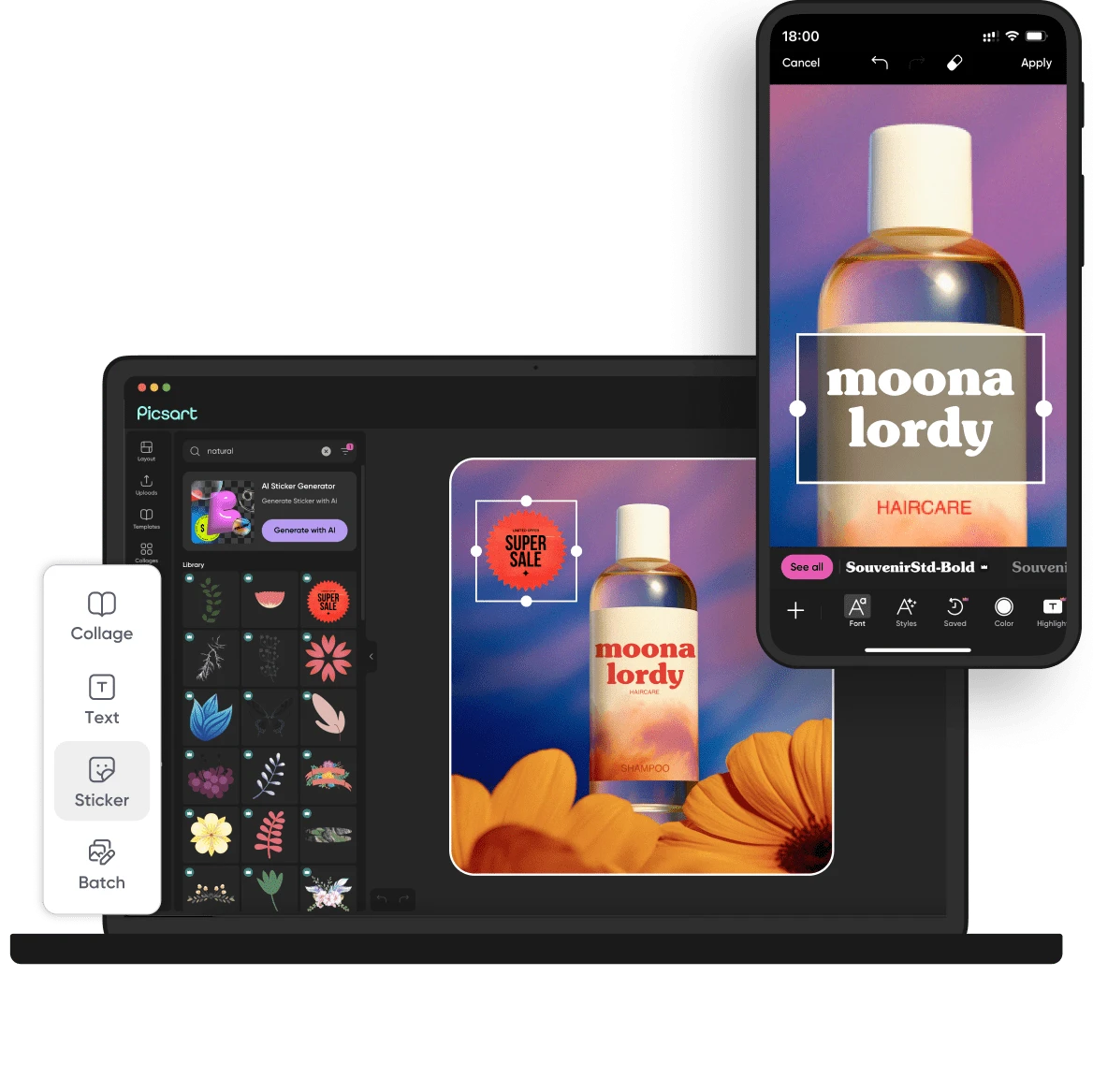
Picsart is an all-in-one creative platform with a wide selection of free AI design tools. Create content fast with expert-crafted templates, built-in asset libraries, and generative AI tools.
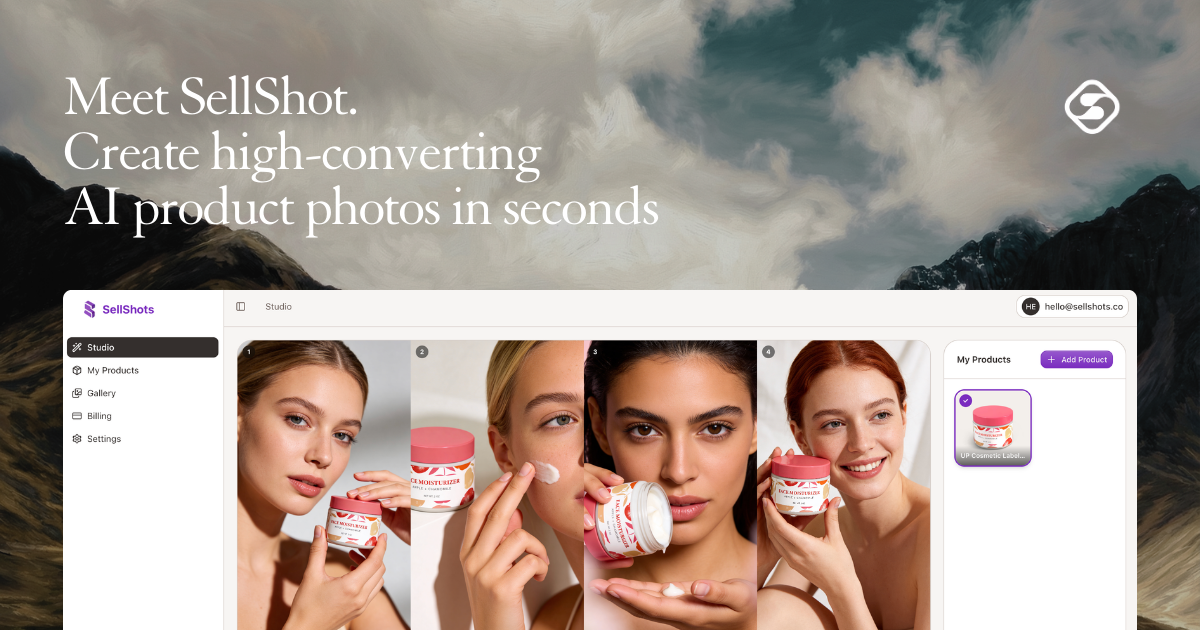
SellShots turns one product photo into a complete AI photoshoot with studio, lifestyle and model shots ready to sell on Amazon, Etsy and Shopify. Get high-converting product photos generated in seconds without photography skills.

Nano Banana 2 is Google's latest AI image generation model that combines advanced world knowledge and production-ready specs with lightning-fast speed. It offers subject consistency, precise instruction following, and is available across Google products.