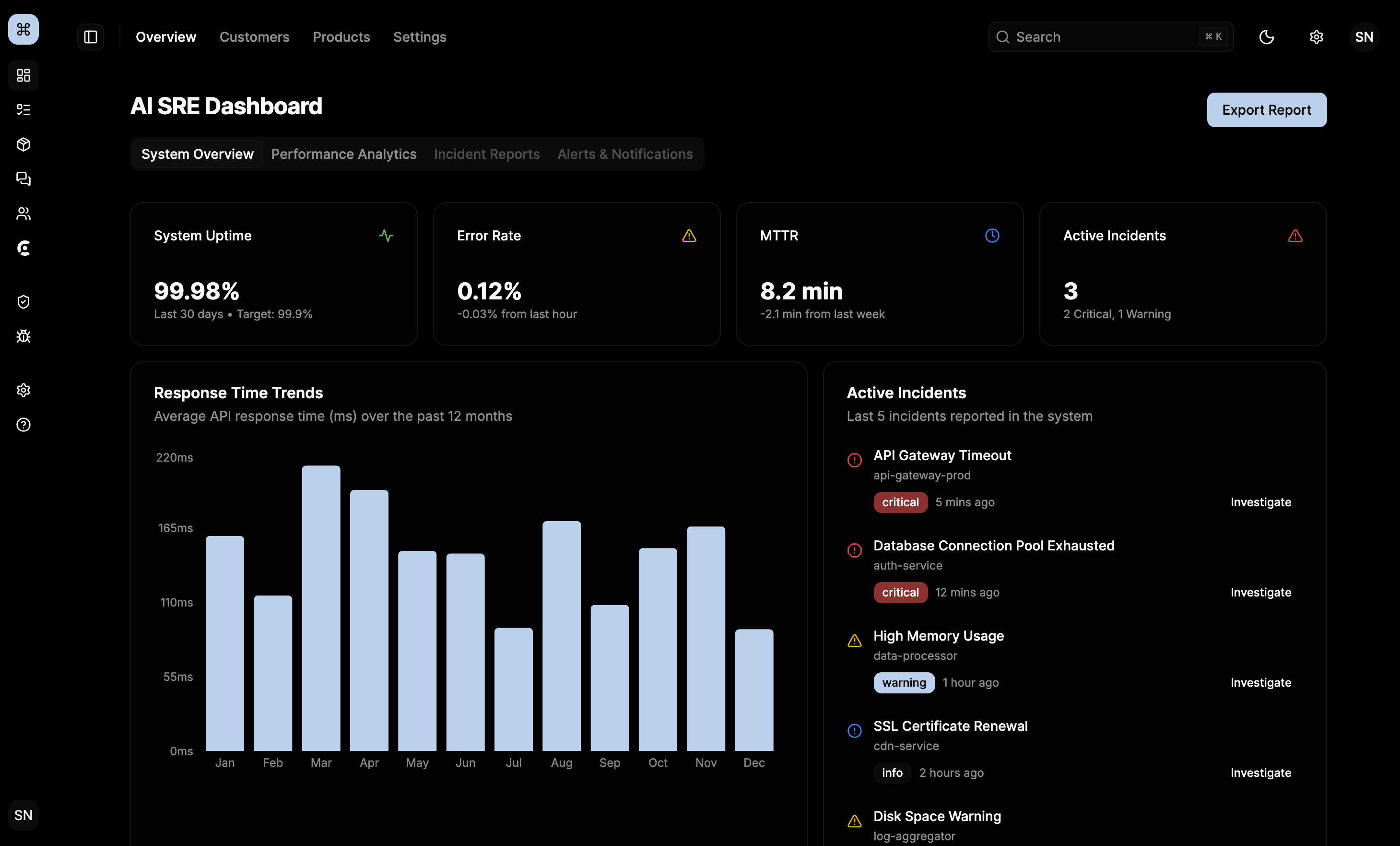
Scoutflo is an AI SRE platform that automates incident response and debugging for cloud-native applications. It handles alerts, finds root causes, and fixes issues in minutes.
Scoutflo is an AI SRE platform designed specifically for cloud-native applications, combining automated incident response and debugging into a single solution. It targets SRE teams and DevOps engineers who manage complex, microservices-based environments where frequent alerts and time-sensitive incidents are the norm. The core value lies in reducing manual toil by handling incoming alerts, identifying root causes, and applying fixes within minutes, thereby transforming incident management from reactive firefighting to a systematic, automated process. By leveraging artificial intelligence, Scoutflo learns from historical data to continuously improve its accuracy and efficiency, enabling teams to maintain high reliability without constant on-call burnout.
The concrete problem Scoutflo solves is the overwhelming volume of alerts and the time-consuming manual debugging process inherent in cloud-native environments. Engineers often waste hours triaging alerts, correlating logs, and tracing requests to find the source of a failure, leading to prolonged downtime, missed service level objectives, and burnout. Scoutflo addresses this pain point by automating initial triage and root cause analysis, allowing teams to resolve issues faster and more consistently. It systematically processes alerts, filters noise, and identifies the most likely cause, reducing cognitive load on on-call engineers. This directly improves uptime, customer satisfaction, and operational efficiency while freeing engineers to focus on innovation and proactive improvements.
The first major feature group is automated alert handling. Scoutflo integrates with existing monitoring and alerting tools to ingest alerts in real time, then uses AI to correlate related alerts, deduplicate noise, and prioritize based on severity and impact. This feature prevents alert fatigue by ensuring that engineers only see actionable items rather than sifting through hundreds of alerts manually. The platform enriches alerts with contextual information from logs and traces, providing immediate insight into the issue. This streamlines the initial response phase and accelerates the path to resolution by presenting a consolidated, prioritized view of active incidents, enabling engineers to act on what matters most.
The second major feature group is root cause analysis. Scoutflo automatically analyzes incident data to pinpoint the underlying cause of a failure using machine learning models trained on historical incident data and system telemetry. It traces the chain of events leading to an outage, examining changes, code deployments, configuration drift, and infrastructure anomalies. By surfacing the root cause with evidence such as relevant log lines or metric spikes, Scoutflo dramatically reduces the time engineers spend on detective work. This capability is critical for complex microservices architectures where root causes are often hidden across multiple services and dependencies, allowing rapid diagnosis without manual correlation.
Publisher
A
admin
Launch Date2026-02-12
Platformweb
Pricingfreemium