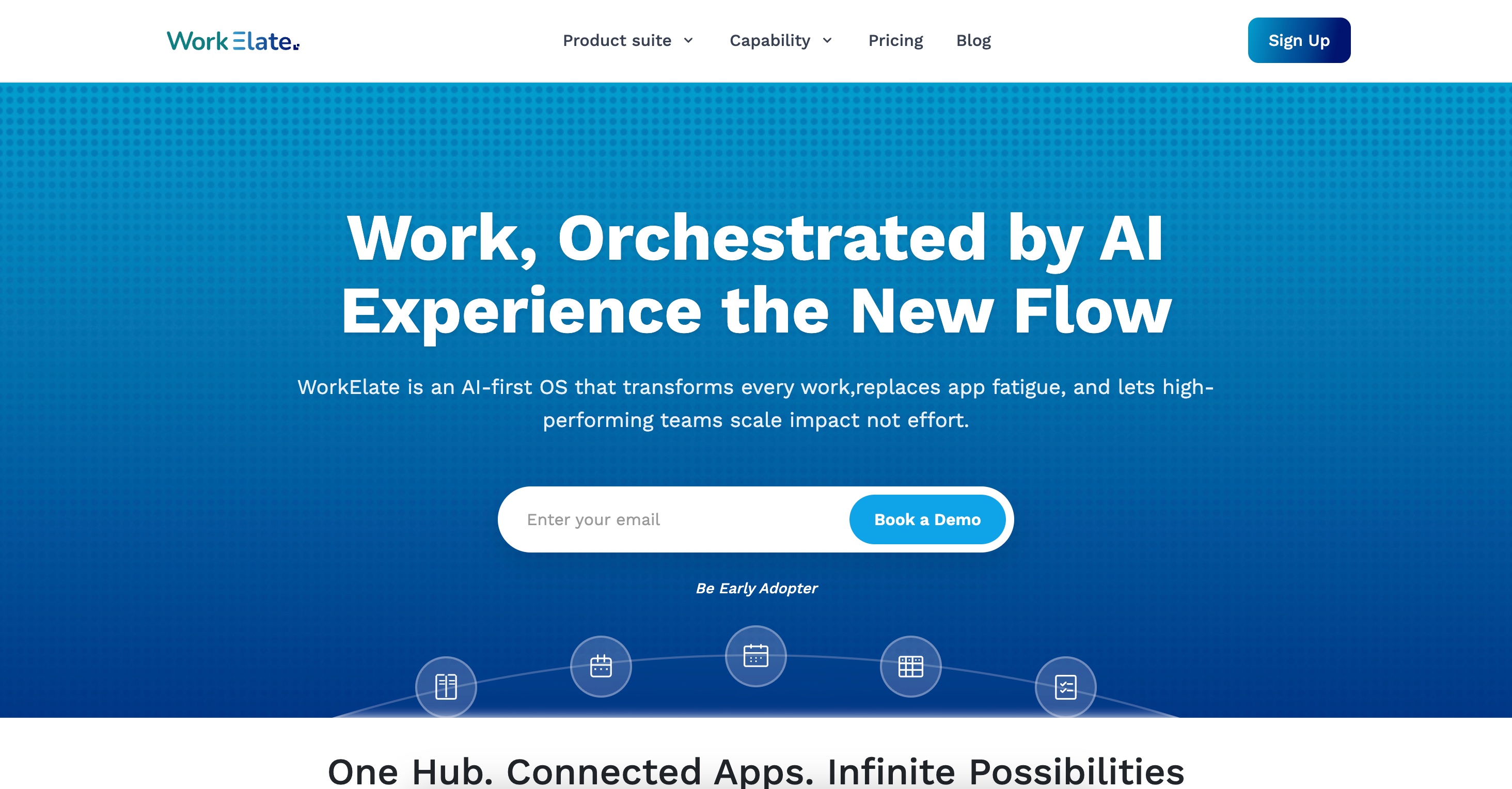
WorkElate is a unified workflow platform that replaces 15+ SaaS tools with one AI-native workspace. It integrates CRM, HRMS, tasks, email, chat, forms, boards, automation, and analytics to eliminate tool chaos and improve team execution.
WorkElate is an AI-native office suite designed to run your work for you, integrating docs, sheets, mail, chat, tasks, and automation into one intelligent workspace. This unified workflow platform is built AI-first, not retrofitted with plugins, specifically for modern B2B teams, founders, and consultants seeking to eliminate tool fragmentation. Its core value lies in orchestrating complex business operations through artificial intelligence, replacing over 15 disparate SaaS applications with a single, cohesive environment that enhances execution and reduces operational overhead. By centralizing critical functions like CRM, HRMS, and project management, WorkElate delivers a streamlined experience where intelligence drives every interaction, transforming how teams collaborate and achieve outcomes.
Teams today grapple with severe tool chaos, using numerous applications daily that create information silos, constant context switching, and wasted hours in alignment meetings. This fragmentation leads to work anxiety, missed commitments, and sluggish execution, as data and tasks remain trapped across disconnected platforms. WorkElate directly addresses this pain point by consolidating essential tools into one AI-native workspace, ensuring that all work—from client onboarding to internal communications—flows seamlessly without manual bridging. The platform’s design eliminates the need for taking discussions offline or chasing action items across apps, thereby reducing coordination friction and enabling teams to focus on high-impact activities rather than administrative overhead.
One major feature group is its AI-powered automation engine, exemplified in client onboarding workflows. The system connects forms, personas, boards, tasks, and data into one intelligent flow, where each step triggers the next automatically. For instance, formNetic auto-generates onboarding forms capturing project details, while xNetic instantly creates rich client personas from that data. This automation ensures that no manual setup is required, and information propagates accurately across the entire process. The benefit is a seamless, error-free onboarding experience that accelerates time-to-value for clients and frees teams from repetitive administrative tasks, allowing them to concentrate on strategic engagement and relationship building.
Another key feature set revolves around its conversational and context-aware task management through taskNetic. Users can create tasks by simply telling the system what needs done in plain language, leveraging natural language processing to convert intent into actionable items. The AI understands project context and team dynamics, enabling smart auto-assignment that matches tasks to individuals based on skills and capacity. Additionally, predictive insights help forecast progress and identify potential blockers before they impact timelines. This transforms task management from a manual, oversight-heavy activity into an intelligent, proactive system that ensures work moves forward efficiently and aligns with broader goals.
Publisher
A
admin
Launch Date2025-12-26
Platformweb
Pricingfreemium
Domain Authority
Ahrefs DR11/100
Traffic Insights
Month2026-03
Estimated Visits417
MoM Visits Growth-4.4%(-19)
Avg Time on Site0s