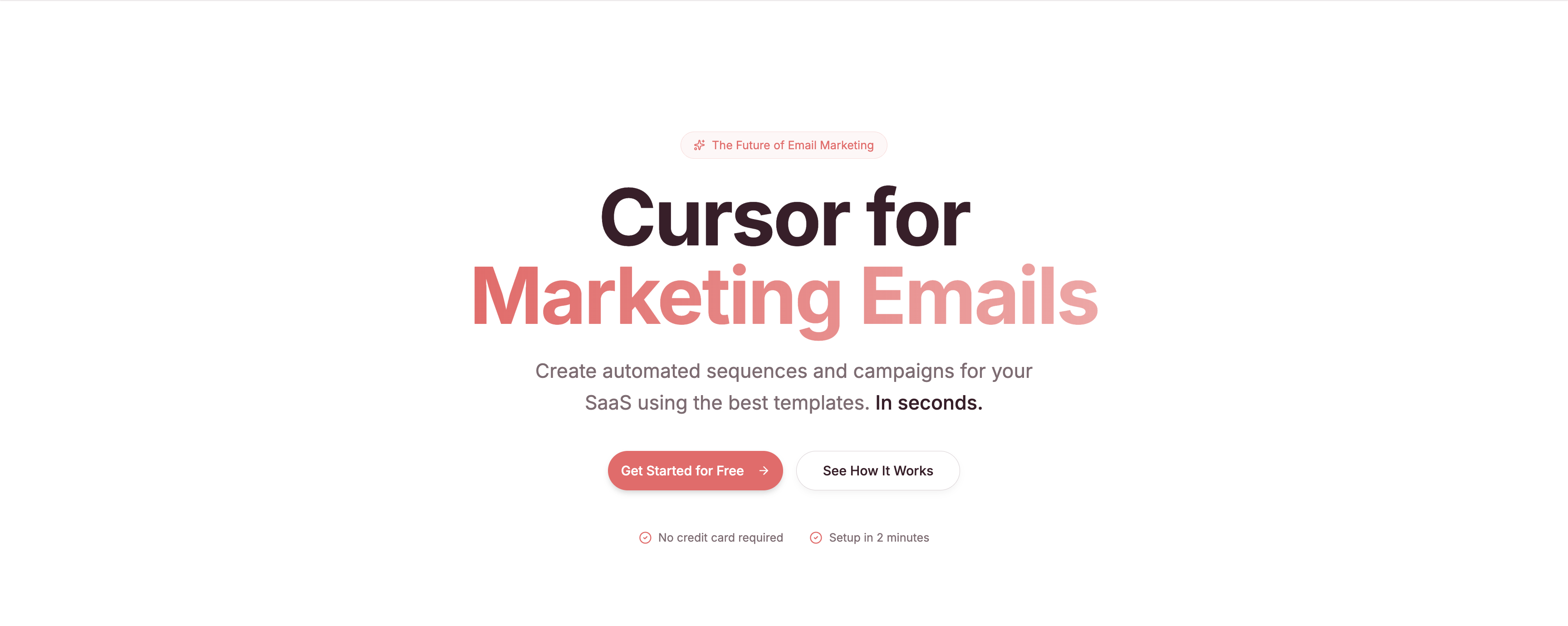
Sequenzy is an email marketing platform designed specifically for SaaS founders. It enables users to create automated sequences and campaigns using AI-powered templates in seconds.
Sequenzy is an email marketing platform specifically designed for SaaS founders, providing a specialized tool to automate and optimize customer communication. Its core value lies in enabling rapid creation of targeted email sequences and campaigns through AI-powered templates, directly addressing the unique needs of software-as-a-service businesses to nurture leads and retain customers efficiently. This platform streamlines the marketing workflow for founders who often lack extensive marketing teams, offering a focused solution to drive growth through automated, personalized outreach. By concentrating on the SaaS vertical, Sequenzy ensures its features and templates are highly relevant, saving significant time and effort compared to generic email marketing tools.
SaaS founders frequently struggle with manually managing customer onboarding, engagement, and retention emails, which is time-consuming and difficult to scale effectively. This pain point is critical because poor communication can lead to high churn rates and missed revenue opportunities from potential upgrades or referrals. Sequenzy solves this by automating these essential email flows, ensuring consistent and timely communication with users at every stage of their journey. The platform directly tackles the problem of marketing resource constraints, allowing founders to execute sophisticated email strategies without needing deep technical or copywriting expertise, thereby protecting revenue and fostering sustainable business growth.
One major feature group is AI-powered templates, which allow users to generate complete email sequences in seconds based on their specific campaign goals. These templates are pre-designed for common SaaS scenarios like onboarding, feature announcements, and win-back campaigns, leveraging artificial intelligence to tailor the content. This works by the user selecting a template type and providing basic inputs, after which the AI drafts coherent, context-appropriate email copy. It is useful because it eliminates the blank page problem and ensures professional, effective messaging without requiring copywriting skills, dramatically accelerating campaign deployment and maintaining brand voice consistency across all communications.
Another key feature is automated sequence creation, enabling the setup of multi-step email workflows that trigger based on user actions or time delays. This functionality allows founders to design complex nurturing paths, such as a series of educational emails after a user signs up or re-engagement emails if a user becomes inactive. The platform provides intuitive visual builders to map out these sequences, defining conditions and branching logic. This is beneficial because it automates personalized follow-ups at scale, ensuring each subscriber receives relevant content at the optimal time, which increases open rates, click-through rates, and overall campaign effectiveness without manual intervention for each user.
Publisher
A
admin
Launch Date2025-12-29
Platformweb
Pricingfreemium
Tech Stack
#API#Stripe integration