Imbue is an AI agent platform that builds tools to help people think, create, and build with complete control over their digital environment. The company focuses on honest software that works for the user, not the corporation that built it. By offering a suite of products including mngr, Bouncer, Sculptor, Blueprint, Vet, and Latchkey, Imbue empowers developers, researchers, and everyday users to modify algorithms, run agents, and build personal applications. Their core value is amplifying human capability rather than replacing it, as stated by CEO Kanjun Qiu: Technology's highest purpose is to amplify what is already inside us. This philosophy drives every product they create, making AI accessible and loyal to the individual.
The central problem Imbue solves is the lack of user agency in modern software, where tools often prioritize company interests over user needs. Many platforms collect data, limit customization, and lock users into closed ecosystems. Imbue counters this with honest software that puts control back in the hands of its users. Whether it's filtering a Twitter feed to remove noise or running multiple coding agents without platform restrictions, Imbue's tools address the frustration of being a passive consumer. This matters because users increasingly want to build, modify, and personalize their digital experiences without corporate interference, enabling genuine ownership and autonomy.
mngr is a first major feature that lets users run any coding agent in parallel, anywhere. It supports execution of multiple agents simultaneously, allowing developers to test, compare, and scale their work across different environments. The utility lies in its flexibility: mngr works with various agent types and can be deployed locally or in the cloud, removing dependence on a single vendor. This parallel capability speeds up development cycles, enables large-scale experiments, and lets users harness the full power of AI agents without artificial limits. It is designed for anyone needing reliable, concurrent agent orchestration.
Bouncer is another key feature that filters and heals a user's Twitter feed. It uses AI to identify and remove unwanted content while also attempting to fix or improve the feed's quality. The healing aspect means it can adjust filtering over time based on user feedback, making the experience smarter and more personalized. This product directly addresses the problem of social media noise, giving users a way to reclaim their attention. By putting control of the feed in the user's hands, Bouncer aligns with Imbue's mission of tools that are loyal to you, not the company that built the platform.
admin
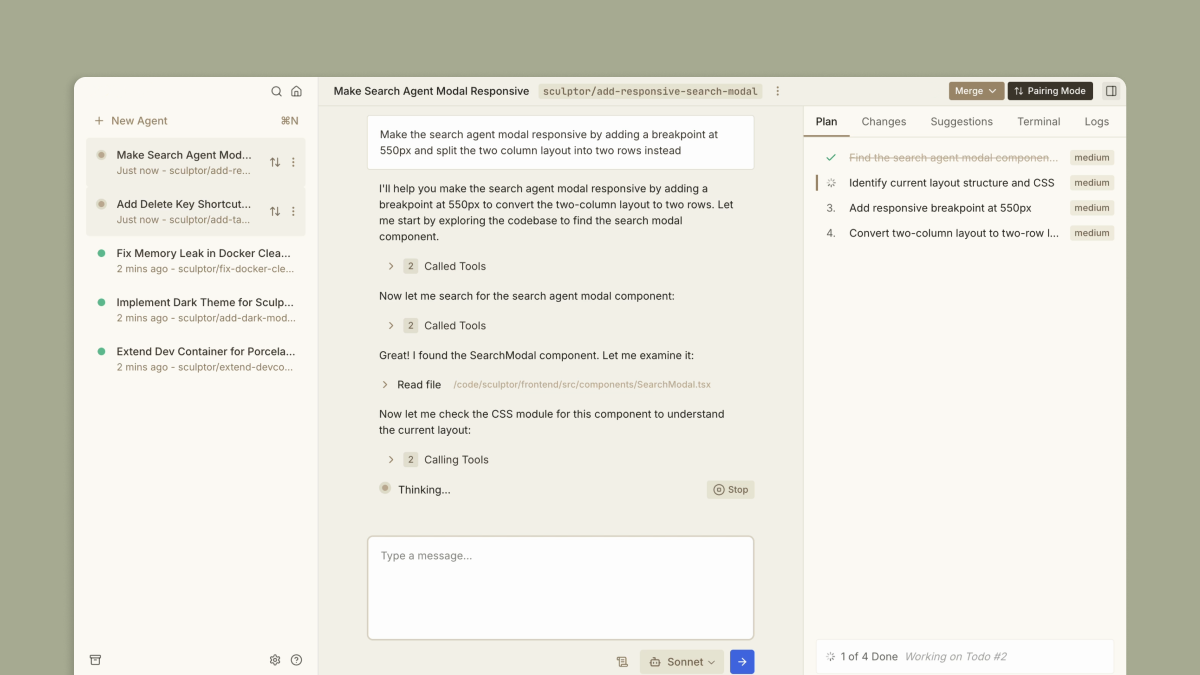
Sculptor provides a missing UI for parallel agents, allowing users to visualize and manage multiple agent workflows graphically. It integrates with mngr to offer a visual interface for launching, monitoring, and debugging agents. Additionally, Imbue offers Blueprint, Vet, and Latchkey as part of its open-source ecosystem on GitHub. Blueprint likely aids in defining agent structures, Vet may provide validation or testing, and Latchkey could handle access or permissions. While each tool has a specific role, together they form a comprehensive toolkit for agent development. All are publicly available, reflecting Imbue's commitment to transparency and community collaboration.
The overall workflow of Imbue's platform is built on first principles and questioning the status quo. Users start by selecting a product based on their need—be it running agents with mngr, filtering feeds with Bouncer, or managing UIs with Sculptor. The tools are designed to work together, allowing a developer to code agents in mngr, validate them with Vet, and visualize performance via Sculptor. Imbue emphasizes open-source development and publishes research to push the frontier of AI. Their approach is iterative and user-driven, with updates and new capabilities released through their GitHub repositories and blog.
Concrete use cases include a developer using mngr to run hundreds of coding agents in parallel to test a new algorithm across different environments, drastically reducing iteration time. Another user might deploy Bouncer to clean their Twitter feed from spam and toxic content, then use the healed feed to discover relevant discussions without distraction. A team building an AI agent system could use Sculptor to monitor agent behavior and coordinate tasks visually, while relying on Blueprint for architecture design. These scenarios lead to outcomes like improved productivity, restored online experience, and deeper technical understanding—all reinforcing the product's value of giving people power over their digital world.
Imbue targets developers, researchers, and tech enthusiasts who want to build and control their own AI tools. The platform is accessible via web products like mngr and Bouncer, with open-source components on GitHub that support customization and integration. While specific pricing is not mentioned in the provided content, the open-source nature suggests a free entry point for many tools. The company also engages with the community through events, a podcast, and policy work to advocate for human-first AI. Ultimately, Imbue offers an alternative to corporate-controlled platforms, providing loyal, honest software that amplifies individual capability.
Imbue is designed for developers, researchers, and tech-savvy users who want to build, customize, and control AI agents and tools. It appeals to individuals frustrated with closed ecosystems and corporate-controlled software, seeking honest, open alternatives. Specific roles include software engineers, data scientists, AI researchers, machine learning practitioners, and open-source contributors. Additionally, power users of social media who wish to reclaim their feed will find Bouncer valuable. The platform's open-source offerings also target hobbyists and learners eager to explore agent development without vendor lock-in.