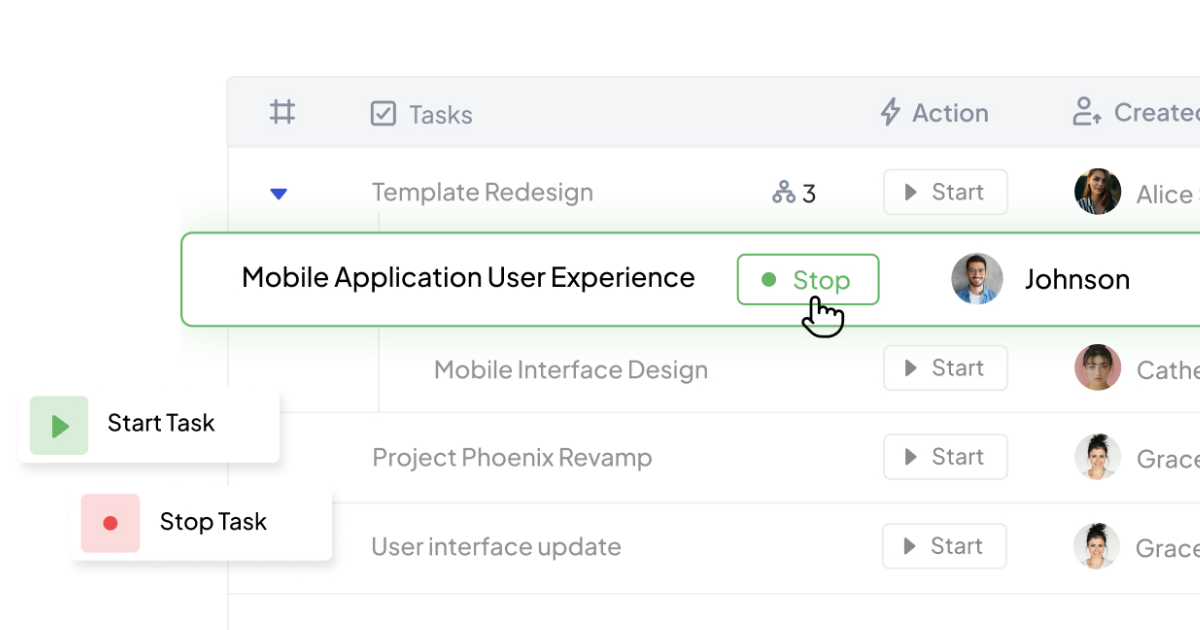
Hidesc is an enterprise project management software built specifically for hybrid organizations and large teams that require structured workflows alongside agile flexibility. It combines task management, OKR tracking, role-based access control, and approval workflows into a single unified platform. The core value lies in providing granular control over permissions and project visibility while maintaining the speed and collaboration of modern team tools. This makes Hidesc ideal for companies with complex hierarchies, multiple departments, and the need to balance top-down strategic alignment with bottom-up execution. The platform is designed from the ground up to handle organizational complexity without sacrificing ease of use, enabling enterprises to maintain security and compliance while fostering seamless collaboration across diverse teams and locations.
The concrete problem Hidesc solves is the lack of fine-grained control and alignment in traditional project management tools. Many platforms offer broad access controls but fail to address the nuanced permission needs of large organizations. Without field-level permissions, sensitive data like salaries or strategic plans can be exposed inadvertently. Multi-level approval workflows are often missing, forcing teams to rely on email chains and manual sign-offs, which leads to bottlenecks, compliance risks, and reduced accountability. Hidesc eliminates these pain points by providing an integrated system where permissions can be set down to individual fields, and approval processes are automated and visible. For hybrid organizations, the ability to maintain a clear organizational hierarchy while enabling agile task management is critical, and Hidesc bridges the gap between hierarchical control and team autonomy.
The first major feature group is Role-Based Access Control (RBAC) with field-level permissions and organizational hierarchy visualization. Hidesc allows administrators to define custom roles with specific permissions for viewing, creating, editing, deleting, and approving content. The permission matrix can be applied at the field level, meaning even within a task, certain fields can be hidden from specific roles, which is particularly useful for HR, finance, and executive teams handling confidential information. The org-chart integration automatically reflects the company's structure, making it easy to align permissions with reporting lines. Dynamic hierarchy ensures that changes in the organization are reflected in the platform in real time. Audit trails provide a complete history of permission changes, ensuring accountability. This feature group is essential for enterprises that require security and compliance without sacrificing operational efficiency.
admin
The second major feature group is the integrated OKR system with cascading objectives and real-time progress tracking. Hidesc enables organizations to set company-wide objectives and break them down into team key results. Users can track progress on each key result in the same dashboard where they manage tasks, ensuring strategic alignment across all levels. The OKR module includes progress bars, status updates, and alignment views that show how individual tasks contribute to broader goals, eliminating the common disconnect between daily work and company objectives. For hybrid organizations, the ability to cascade goals from executives to remote teams is critical, and Hidesc's OKR tracking supports periodic reviews and automatic roll-ups of progress, making it easy to report to stakeholders. By integrating OKRs with task management, Hidesc ensures that strategic planning translates directly into actionable work.
The third major feature group is workflow automation with a visual drag-and-drop builder, conditional logic, and AI-powered suggestions. Hidesc's automation module allows users to create custom triggers and actions without any coding. For example, when a task status changes to Complete, an approval request can be automatically sent to a manager. The visual builder makes it easy to design complex workflows that match specific business processes, such as expense approvals, leave requests, or content reviews. Conditional logic ensures that only the right actions are triggered based on task attributes. Additionally, AI-powered suggestions help optimize workflows by identifying repetitive patterns and recommending automation. This reduces manual work by up to 80%, as stated on the site. Hidesc also offers over 100+ automation templates to get started quickly, and cross-platform integration connects email, CRM, chat, and documents into unified workflows.
Overall, Hidesc provides an integrated platform that brings together task management, project management, goal tracking, communication, and operations in one dashboard. Users can switch between multiple views (List, Board, Calendar) to manage tasks according to their preference. The platform supports multi-project and multi-team management, allowing managers to oversee all work from a single interface. The organizational hierarchy visualization (organogram) gives a clear picture of reporting lines and team structures. Team collaboration is facilitated through built-in chat, document management with version control, and shared workspaces. Time tracking is integrated directly into tasks, making it easy to monitor billable hours and productivity. Custom reporting and analytics provide dashboards tailored to each role, with features like predictive timelines and anomaly detection. Hidesc's approach is to unify all business operations onto one platform, reducing the need for multiple disconnected tools.
Concrete use cases include an accounting firm managing multiple client portfolios with deadline tracking and document version control, where field-level permissions ensure senior staff see sensitive data while juniors handle compliance tasks. In a manufacturing company, multi-level approval workflows streamline purchase orders and quality checks, while the OKR system aligns factory floor teams with corporate revenue targets. For a hybrid organization with both in-office and remote teams, Hidesc provides a collaboration hub with real-time messaging and client portals. The org-chart integration clarifies reporting lines and ensures that remote workers have the same access as on-site employees. Outcomes include reduced administrative overhead, faster decision-making, and improved goal alignment across departments, directly addressing the pain points of enterprises.
Target users include project managers overseeing complex multi-team projects, enterprise organizations with 50+ employees, companies with hierarchical approval requirements, hybrid organizations balancing agility with structure, and SMBs needing scalable project management. IT teams benefit from role-based access control and on-premise deployment options, while operations managers can oversee multiple departments from a single dashboard. Hidesc is available on cloud and on-premise, with starting prices from $2.49 to $4.99 per user per month, significantly lower than competitors like Asana or Monday.com. The platform integrates with over 50 tools and offers 100+ API endpoints for customization. In summary, Hidesc delivers an enterprise-grade project management software that combines the flexibility of modern tools with the control and security required by large organizations, making it the ideal solution for hybrid teams seeking operational excellence.
Project managers managing complex, multi-team projects; enterprise organizations with 50+ employees; companies with hierarchical approval requirements; hybrid organizations balancing agility with structure; SMBs needing scalable project management; IT teams requiring role-based access control; and operations managers overseeing multiple departments. Hidesc is also suitable for startups, agencies, accounting firms, and remote teams looking for structured yet flexible productivity software.