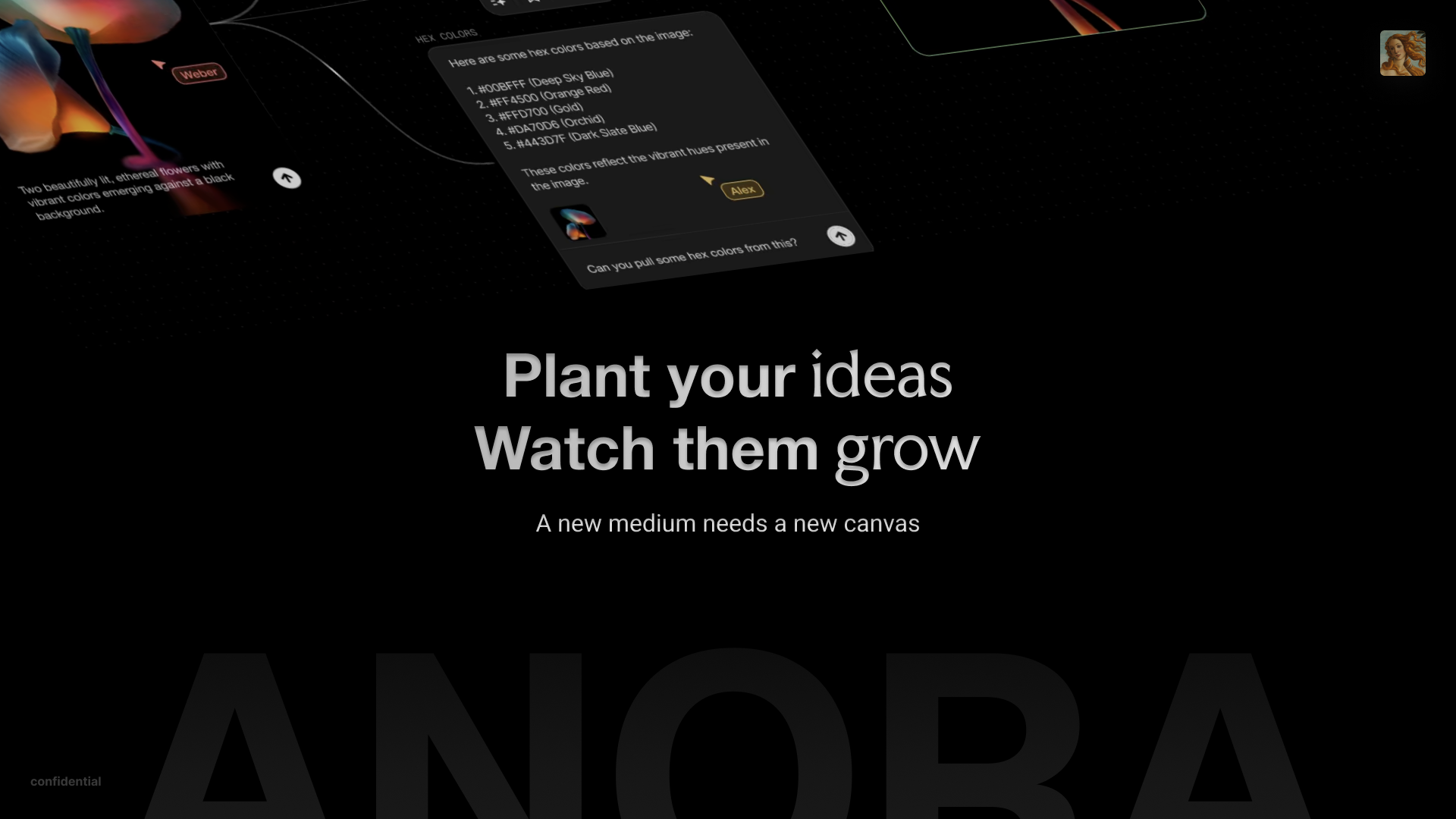
ANORA is your intelligent canvas and creative environment designed for generative workflows. It provides a platform for creative processes using artificial intelligence capabilities.
ANORA is a generative AI canvas designed specifically for creative agencies and production studios who need to produce high-quality visual content at scale. This platform unifies text, image, and video AI models into a single, interconnected workspace. Instead of juggling multiple standalone tools, users can wire a concept directly into an image, drag that image into a video generation process, and encode the entire workflow as a repeatable system. The core value of ANORA lies in codifying creative direction—preserving the aesthetic, prompt logic, and decision-making of senior creatives so that teams can execute faithfully and efficiently. It is the first tool built not for casual experimentation but for the disciplined demands of professional studio work.
The early generation of AI tools promised universal accessibility but failed to solve the operational chaos faced by real agencies. A typical campaign required at least five disconnected subscriptions—ChatGPT for text, an image generator, a video model, a design tool, and a platform for polishing—costing over $1,500 per month. Every new project started from scratch, with the creative director's taste and insights locked inside their head rather than embedded in the team's workflow. ANORA directly addresses this pain point by replacing that fragmented toolchain with a unified canvas. It eliminates copy-paste between tabs and ensures that every iteration reflects a consistent vision. The result is a dramatic reduction in both time and cost, allowing agencies to produce more work while maintaining creative control.
The first major feature of ANORA is its unified generative canvas, described as one canvas with four moves. Users think of it as an assembly line for imagination: they connect AI tools like Lego bricks on a single surface rather than jumping between separate applications. A concept is wired into an image; that image is dragged into a video model; the whole sequence can be edited and refined within the same environment. Because all models coexist on one canvas, changing a detail at the start of the line automatically ripples through the entire piece. This eliminates the need to manually recreate adjustments across different software. The benefit is a streamlined, end-to-end workflow that saves hours of repetitive work and reduces subscription costs to a fraction of what agencies previously paid.
The second major feature is ANORA's codified creative systems, built from four parts that are encoded once and re-applied forever. Senior creative directors encode the vision—including reference images, prompt patterns, editing decisions, and brand guidelines—into a reusable system. Team members then execute that system faithfully, producing hundreds of renders that are indistinguishable from the director's original hand. Each render costs only $10–30 in compute, far less than a traditional production day. This feature ensures that the creative director's taste becomes an institutional asset rather than a personal secret. It scales expertise without diluting quality, making it possible for a small team to output work that would normally require a full crew-and-location shoot.
Publisher
A
admin
Launch Date2026-02-08
Platformweb
Pricingfree
Tech Stack
#AI
Domain Authority
Ahrefs DR1/100